- All
- Product Name
- Product Keyword
- Product Model
- Product Summary
- Product Description
- Multi Field Search

Views: 0 Author: Site Editor Publish Time: 2026-08-16 Origin: Site

Executing a 1,000km road trip requires balancing range anxiety, high-occupancy comfort, and energy efficiency. Pure electric vehicles often struggle on rural routes due to charging infrastructure gaps. Families need reliable, uninterrupted travel without mandatory hour-long charging stops. The XIAOMI PENCEN N90 MAX operates as an Extended-Range Electric Vehicle (EREV). It bridges the gap between pure electric daily commuting and unrestricted cross-country travel. This platform offers a reconfigurable, large-space solution for families. You get the smooth acceleration of an EV combined with the refueling convenience of a traditional Gasoline SUV. We will evaluate its technical capabilities, spatial ergonomics, and real-world highway performance to determine its viability for long-distance driving.
Dual-Powertrain Flexibility: The XIAOMI PENCEN N90 MAX utilizes a ~100kWh battery paired with a range-extending combustion engine, claiming a combined range exceeding 1,500km to eliminate charging infrastructure dependency.
High-Occupancy Ergonomics & Reconfigurability: At 5.28 meters in length, the 7-seater configuration prioritizes cabin volume and modularity, allowing families to adapt the space for maximum cargo or passenger comfort during extended multi-hour drives.
Efficiency Trade-offs: While highly efficient on battery power (up to 464km claimed EV range), fuel consumption dynamics shift significantly when operating with a depleted battery on highway routes.
"Large Yet Easy to Drive" Dynamics: Despite its massive footprint, the integration of Xiaomi’s intelligent driving suite and calibrated steering aims to reduce driver fatigue and simplify maneuverability, a critical advantage over legacy mechanical SUVs.
Evaluating a vehicle for frequent, long-distance family travel requires strict baseline requirements. A cross-country vehicle must handle diverse climates, varied road surface conditions, and heavy passenger payloads. Highway driving introduces sustained high speeds. This drastically alters aerodynamic drag and energy consumption. Families taking road adventures need predictable performance. They need a vehicle that absorbs road imperfections while maintaining stable high-speed dynamics. Success means arriving at the destination without excessive physical fatigue or logistical frustration. You cannot judge a highway cruiser by how it handles a 15-minute urban commute.
Uninterrupted travel is the primary metric for road trip success. Traditional vehicles excel here because gas stations are ubiquitous. Pure electric vehicles require meticulous route planning. You must account for charging station availability, charger output speeds, and potential queue times. Charging downtime can add hours to a multi-day journey. A successful long-distance SUV must minimize this dependency. It should offer the flexibility to bypass crowded charging hubs during peak holiday travel. Refueling should take minutes, ensuring the journey dictates the schedule rather than the vehicle's battery state.
Spatial requirements for five to seven passengers are demanding. You must consider more than just legroom. True comfort over an eight-hour journey depends on several interconnected factors. We look at the physical touchpoints and the environmental controls within the cabin.
Comfort Metric | Requirement for Long-Distance Travel | Impact on Passenger Fatigue |
|---|---|---|
NVH (Noise, Vibration, Harshness) | Acoustic glass, dense sound deadening, isolated subframes. | Reduces the low-frequency drone that causes headaches and exhaustion over multi-hour drives. |
Climate Control | Multi-zone systems with dedicated rear compressor output and roof vents. | Prevents air stagnation and temperature imbalances between the front and third rows. |
Seat Ergonomics | High-density foam, adjustable thigh support, multi-way lumbar adjustment. | Distributes body weight evenly to prevent lower back pain and circulation issues. |
Suspension Damping | Adaptive dampers or air suspension to isolate chassis movement. | Prevents harsh impacts from expansion joints from transferring directly into the passenger's spine. |
Driving a massive vehicle across state lines requires intense concentration. Cognitive load builds up over hours of steering correction and speed management. Advanced driver assistance systems (ADAS) mitigate this fatigue. Level 2+ autonomous features transform the driving experience. Adaptive cruise control manages the distance to the car ahead. Active lane-centering keeps the vehicle positioned without constant micro-adjustments from the driver. These systems act as a co-pilot. They handle the tedious aspects of highway cruising so the human operator remains alert for complex hazards.
The automotive market offers distinct solutions for long-haul driving. Standard internal combustion engines rely entirely on mechanical linkages. An engine burns fuel, rotates a transmission, and drives the wheels. The EREV framework takes a radically different approach. It decouples the combustion engine from the drivetrain. Understanding this distinction helps predict how the vehicle will behave under heavy loads.
In an EREV, the combustion engine never directly drives the wheels. It acts purely as an onboard electrical generator. Electric motors handle all propulsion. You get the linear, instant torque of an EV at all times. There are no transmission shifts. There is no turbo lag. When the battery charge drops below a specific threshold, the gasoline generator activates. It runs at optimal RPMs to produce electricity. This power flows either directly to the electric motors or back into the battery pack. This architecture simplifies the mechanical drivetrain but increases the complexity of the electrical management system.
Housing a massive 100kWh battery alongside a combustion engine and a fuel tank presents unique engineering challenges. Weight distribution is the primary concern. The heavy battery sits low in the floorpan, dropping the center of gravity. The engine and fuel tank add mass to the extremities. Thermal management becomes highly complex. The vehicle must cool the high-voltage battery during rapid discharge. Simultaneously, it must manage the extreme heat generated by the combustion engine. Independent cooling loops are required. The system routes coolant efficiently to prevent thermal throttling during steep mountain ascents.
Operating dynamics shift based on the battery's state of charge. We must contrast these two distinct operating modes to understand highway performance.
Operating Mode | Propulsion Source | Efficiency Characteristics | NVH Impact |
|---|---|---|---|
Fully Charged (EV Mode) | 100kWh Battery | Maximum efficiency. Zero tailpipe emissions. Ideal for the first 300-400km of a trip. | Near silent operation. Only wind and tire noise present. |
Depleted (Charge-Sustaining Mode) | Gasoline Generator | Lower overall efficiency. Energy is lost converting combustion to electricity. | Engine drone becomes noticeable under heavy acceleration or uphill climbs. |
Starting a road trip with a 100% battery yields exceptional smoothness. Once the battery reaches its minimum buffer, the generator engages. In this charge-sustaining mode, the vehicle relies entirely on the gasoline generator. Fuel consumption increases because the engine must work hard to propel a heavy, aerodynamically large vehicle at highway speeds.
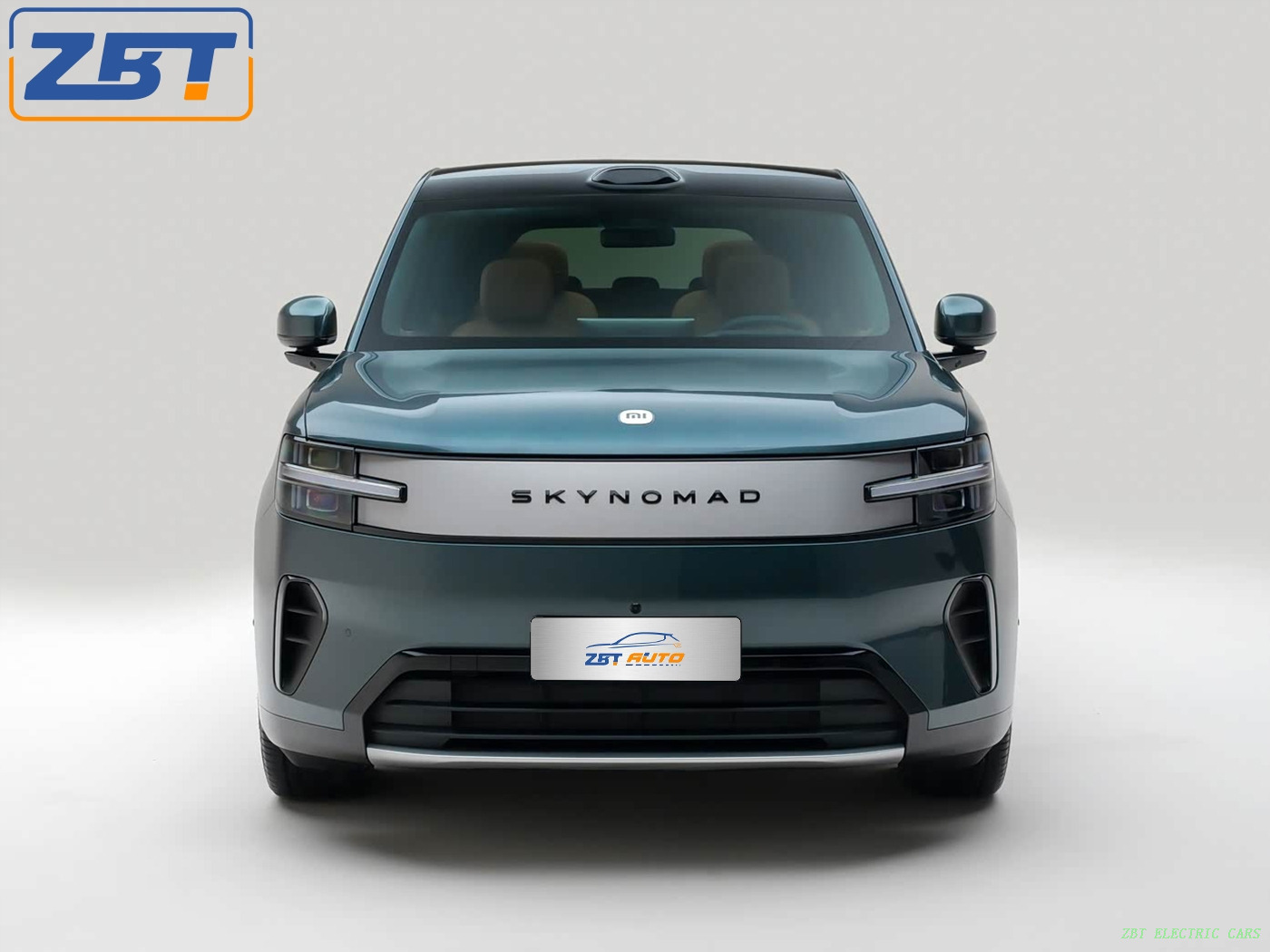
Manufacturer claims state a 464 km electric range and a 1,705 km combined range. You must adjust these figures for reality. Official testing cycles often occur at lower speeds with minimal climate control usage. Highway driving at 120 km/h drastically reduces electric range due to exponential aerodynamic drag. A fully loaded cabin with luggage adds significant weight, further penalizing efficiency. In real-world highway conditions, expect the pure electric range to drop by 20% to 30%. The combined range remains massive, but achieving the full 1,705 km requires conservative driving speeds and favorable weather. Cold climates reduce battery efficiency and force the generator to activate sooner.
To accurately estimate your highway range, consider these variables:
Cruising Speed: Driving at 130 km/h consumes exponentially more energy than driving at 100 km/h due to wind resistance.
Elevation Changes: Climbing mountain passes drains the battery rapidly, though regenerative braking recovers some energy on the descent.
Ambient Temperature: Extreme cold forces the battery thermal management system to consume power just to keep the cells warm.
Payload Weight: Seven passengers and a roof box significantly increase the rolling resistance and aerodynamic drag.
A length of 5.28 meters places this vehicle in the full-size category. This massive footprint dictates the interior packaging. The 7-seat layout accommodates adult passengers, not just children. The first and second rows feature captain's chairs with extensive articulation, heating, and ventilation. Legroom is abundant. Unlike mid-size SUVs, a 5.28-meter chassis allows for usable third-row legroom. Adults can endure multi-hour stints here without severe cramping. With all seven seats deployed, cargo space remains functional for soft bags. Folding the third row flat creates a cavernous hauling area for oversized gear. The cabin adapts to the mission. Seats fold to create resting areas. This modularity helps families who need to change the interior layout mid-journey.
Multi-hour drives require robust entertainment and comfort systems. The smart infotainment ecosystem keeps rear passengers engaged. A central screen is insufficient. The vehicle features multi-zone climate control, ensuring the third row receives adequate heating and cooling. Device charging ports are scattered throughout all three rows, preventing battery anxiety for personal electronics. Seamless device integration allows passengers to stream media directly to rear-seat displays. This technological suite transforms the cabin from a simple transport box into a mobile living room. It reduces travel fatigue for children and adults alike.
Xiaomi's integration of advanced sensors defines the highway experience. The vehicle utilizes a comprehensive suite of LiDAR, millimeter-wave radars, and high-definition cameras. This hardware feeds data into powerful onboard processors. For cross-country travel, this means reliable automated lane changes and robust traffic jam assistance. The LiDAR provides precise depth perception, even in low-light conditions or heavy rain. When navigating monotonous interstate highways, the system maintains lane positioning with minimal ping-ponging. It smoothly adjusts speed for merging traffic. This level of autonomy reduces the physical and mental strain on the driver during 10-hour driving days.
No vehicle design is perfect. Every engineering decision involves compromise. The dual-powertrain architecture introduces specific trade-offs that buyers must understand. You gain massive range flexibility, but you accept increased mechanical complexity and weight. You must evaluate if these compromises align with your specific travel habits.
Housing a 100kWh battery alongside a combustion engine results in immense curb weight. This mass affects fundamental vehicle physics. Braking distances will be longer compared to a lighter Gasoline SUV. The suspension must be heavily damped to control body roll during cornering. Hitting a pothole at highway speeds transfers more kinetic energy into the chassis. The tires wear out faster due to the constant friction required to accelerate and decelerate a 2.5-ton object.
Engineers mask this weight through software and calibration. The steering is tuned to be light at low speeds, making parking lot maneuvers effortless. High-definition 360-degree camera systems eliminate blind spots. These cameras provide top-down views, allowing drivers to thread this 5.28-meter behemoth into tight rest stop parking spaces. The vehicle feels surprisingly approachable. It drives smaller than its physical dimensions suggest, reducing the intimidation factor for drivers unaccustomed to full-size SUVs.
Modern flagship vehicles operate as rolling computers. The central infotainment system controls almost every cabin function. Physical buttons are rare. This heavy reliance on software creates potential failure points. If the central screen glitches, adjusting the climate control or accessing navigation becomes difficult. The vehicle depends on Over-The-Air (OTA) updates for feature enhancements and bug fixes. While OTA capability ensures the car improves over time, it also means you are tethered to the manufacturer's software ecosystem. In remote areas with poor cellular reception, cloud-dependent voice assistants may fail. Buyers must ensure the core driving functions remain fully operational without an active internet connection.
While the range extender eliminates pure range anxiety, optimal performance still requires strategic route planning. In areas with sparse fast-charging networks, you will rely heavily on the gasoline generator. You must manage the battery state of charge proactively.
Maintain a Battery Buffer: Do not let the battery drop to 0%. Use the vehicle's software to hold the charge at 20% or 30%. This ensures you always have instant electric torque available for passing semi-trucks on two-lane highways.
Strategic Refueling: Treat the fuel tank as your primary energy reserve in remote areas. Refuel before entering mountainous regions where energy consumption spikes.
Destination Charging: Prioritize hotels or campsites with Level 2 AC chargers. Waking up with a full 100kWh battery drastically improves the efficiency and NVH of the next day's drive.
Servicing an EREV is complex. You own both an advanced high-voltage electrical system and a combustion engine. The combustion engine requires traditional maintenance: oil changes, air filters, and spark plugs. The battery requires coolant flushes and software diagnostics. Outside of primary urban dealership networks, finding technicians qualified to work on high-voltage systems can be challenging. If the generator fails in a rural town, local mechanics may lack the specialized diagnostic tools required to interface with Xiaomi's proprietary software. Assess the proximity of authorized service centers to your primary residence and frequent travel routes.
You must set realistic expectations for charge-sustaining mode. When the battery is at its absolute minimum state-of-charge, the vehicle relies entirely on the generator's output. If you demand maximum acceleration or attempt to climb a steep mountain grade in this state, performance degrades. The generator can only produce electricity at a fixed maximum rate. If the electric motors demand more power than the generator can supply, acceleration will feel sluggish. The engine will hold high RPMs to maximize electrical output, resulting in noticeable cabin drone. Managing your battery buffer effectively prevents this scenario.
Schedule a highway-speed test drive to evaluate wind noise and suspension damping over expansion joints.
Load the third row with adult passengers and luggage to verify spatial reconfigurability and actual comfort levels.
Test the vehicle's acceleration in charge-sustaining mode with a depleted battery to understand the performance shift.
Verify your home electrical panel capacity for a Level 2 charger installation to maximize daily electric commuting benefits.
A: The 1,705km claimed combined range is based on optimized testing cycles. In real-world highway driving at 120 km/h with a loaded cabin, aerodynamic drag and weight reduce efficiency. Expect the pure electric range to drop by 20-30%. The combined real-world range will likely fall between 1,200km and 1,400km depending on climate and payload.
A: It offers a smoother drive. Because electric motors propel the wheels, there are no transmission shifts or power interruptions. However, when the battery is depleted, fuel efficiency drops as the engine works to generate electricity for a very heavy vehicle, making it less efficient than a standard vehicle at sustained high speeds.
A: Despite its massive size, it features a large yet easy to drive dynamic. The steering is heavily assisted at low speeds. High-definition 360-degree camera systems and parking sensors provide excellent spatial awareness, making it surprisingly approachable in tight rest stops and urban environments.
A: The vehicle enters charge-sustaining mode. The onboard gasoline engine activates to function as a generator, supplying electricity directly to the motors. Performance may feel slightly reduced under heavy acceleration, and engine noise becomes noticeable in the cabin as it revs to meet power demands.
A: Yes. The 5.28-meter chassis allows for genuine third-row legroom and headroom. The seats are supportive, and the dedicated rear climate control vents ensure adults remain comfortable during multi-hour journeys without feeling cramped or overheated.
A: High-compression generators in EREVs often require higher-octane fuel to prevent knocking and ensure optimal efficiency. You should consult the owner's manual for specific octane requirements, as using lower-grade fuel can reduce electrical generation output and increase engine wear.
A: Yes. Core driver assistance features like adaptive cruise control, lane-centering, and automated braking rely on onboard sensors and local processing power. They do not require an active cloud connection to function safely on remote highways.


