- All
- Product Name
- Product Keyword
- Product Model
- Product Summary
- Product Description
- Multi Field Search

Views: 0 Author: Site Editor Publish Time: 2026-06-24 Origin: Site

Urban driving often feels like a daily battle. You fight through dense stop-and-go traffic, squeeze into incredibly tight parking spots, and watch fuel costs fluctuate wildly. The type of vehicle you choose directly dictates how stressful this daily commute becomes. Over the past decade, oversized SUVs have heavily dominated the roads. However, a pragmatic resurgence is happening right now in the EV market. Drivers are realizing large vehicles make city navigation much harder than necessary. Enter the compact, highly efficient alternative.
Our guide objectively evaluates whether transitioning to a City Electric Sedan aligns with your daily routine, personal budget, and local infrastructure access. You will learn exactly how this specific vehicle format solves common urban commuting problems. We will explore charging realities, spatial benefits, and battery logic. Let us dive into why the streamlined sedan form factor is making a major, practical comeback for city dwellers.
Efficiency in Congestion: Stop-and-go traffic actively benefits EV battery life through regenerative braking, unlike internal combustion engines (ICE) that idle inefficiently.
Form Factor Advantage: The lower weight and aerodynamic profile of an electric sedan yield better miles-per-kWh compared to electric SUVs, reducing charging frequency.
Infrastructure Reality: Viability heavily depends on reliable access to Level 2 home charging or a predictable localized public charging network.
TCO Optimization: Higher upfront purchase prices are typically offset over 3–5 years via local utility incentives, tax rebates, and eliminated routine ICE maintenance.
City environments relentlessly punish traditional internal combustion engine (ICE) vehicles. When you sit in gridlock, your gas engine idles continuously. It burns fuel while going absolutely nowhere. Constant shifting and braking accelerate mechanical wear. Your transmission works overtime. Your brake pads grind down quickly. This creates a compounding cycle of mechanical inefficiency. Traditional engines simply hate low speeds. They operate best at steady highway cruising. In town, they choke on their own heat and exhaust.
When we examine the mechanics of traditional cars, their flaws become glaringly obvious. Combustion engines rely on thousands of moving parts. Pistons pump, valves open, and fluids circulate constantly. In a city grid, this mechanical complexity works against you. You stop at a red light. You wait for pedestrians to cross. During all these pauses, the engine continues to fire. It burns expensive gasoline merely to keep itself running. This idling process generates excess heat and harmful localized emissions.
Then, consider the massive size penalty of modern vehicles. Over the last decade, many drivers gravitated toward large SUVs. People often buy them for perceived safety or a commanding view of the road. Yet, these massive vehicles fail miserably in tight urban grids. They lack basic maneuverability. They turn simple parallel parking into a highly stressful geometric puzzle. You find yourself passing up perfectly good parking spots because your crossover simply will not fit. Furthermore, their towering front hoods create dangerous blind spots. This severely increases risks for pedestrians and cyclists navigating crosswalks.
The purpose-built alternative is the Electric SEDAN. It perfectly resolves mechanical bloat. By removing the engine block and multi-speed transmission entirely, the vehicle becomes mechanically pure. It also solves spatial bloat through a lower, much leaner profile. You get a vehicle designed specifically to glide through narrow streets. It fits easily into the most compact parking spaces. You also gain excellent driver visibility over a sloped, aerodynamic hood. You shed the unnecessary bulk and pilot a machine tailored for the exact environment you drive in every single day.
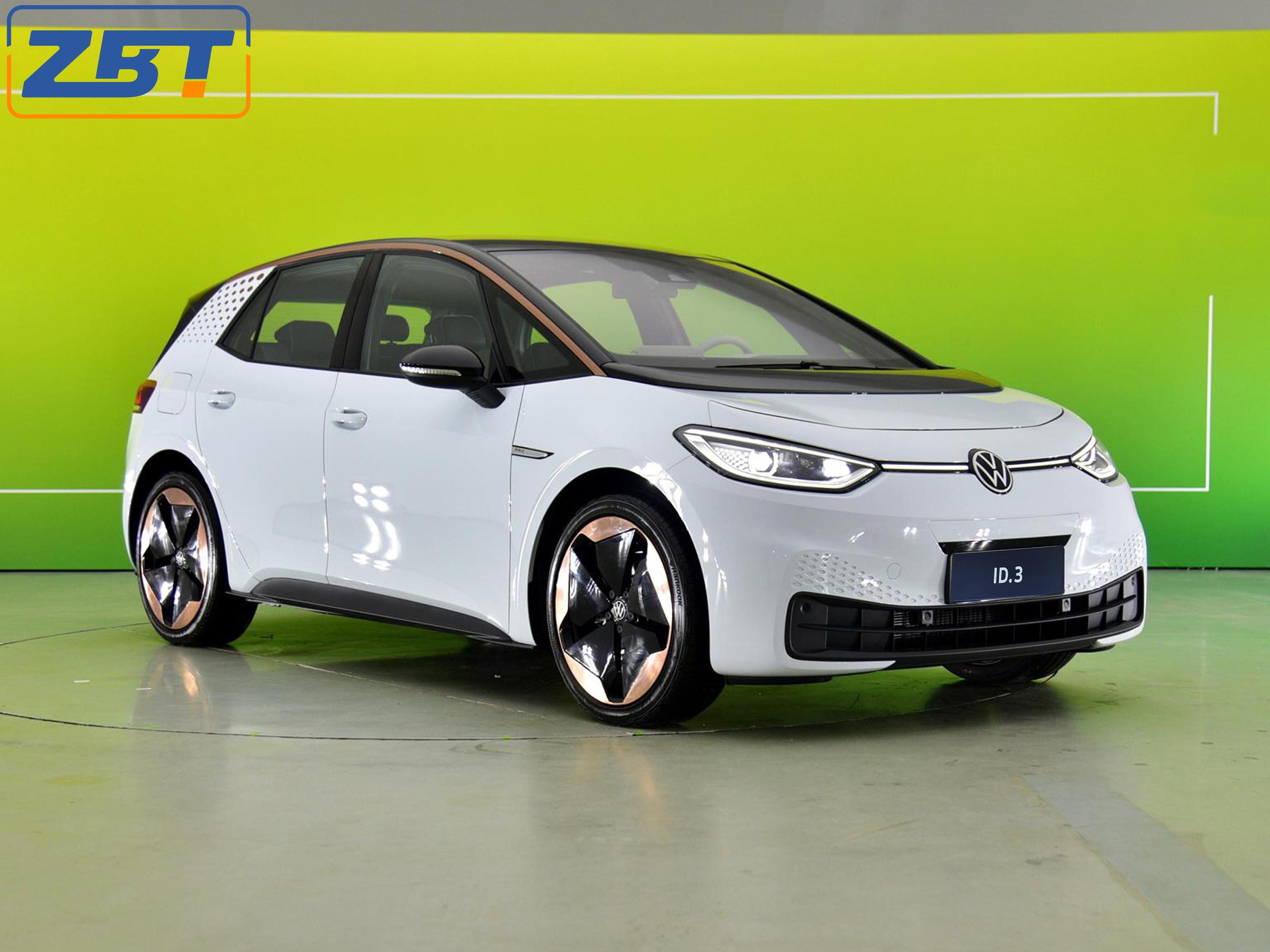
When you drive an EV in the city, specific technical features translate directly into tangible daily benefits. Let us break down how these underlying mechanics drastically improve your urban commute.
Traditional cars waste tremendous kinetic energy. When you press the brake pedal, friction turns momentum into useless heat. That heat vanishes into the atmosphere. You lose that energy forever. Electric vehicles operate entirely differently. They capture this kinetic energy. The electric motor reverses its function during deceleration. It acts as a generator, feeding power directly back into the battery pack.
Urban Outcome: This process dramatically reduces wear on physical brake pads. Many EV owners go years without needing a brake service. More importantly, it increases your actual driving range in dense traffic. You effectively debunk the myth suggesting city driving drains batteries faster. In reality, stop-and-go congestion actively helps recharge the vehicle. Every stoplight becomes an opportunity to harvest energy.
Sedans naturally sit much closer to the ground than bulky crossovers. They slice through the air with a significantly lower drag coefficient. Furthermore, they carry far less raw mass. Stripping away the heavy, elevated suspension components of an SUV makes the car remarkably light on its tires. Crossovers sit high off the ground to offer ground clearance. This lifted stance allows air to crash into the undercarriage, creating massive turbulent drag. A sedan hugs the asphalt cleanly.
Urban Outcome: You achieve vastly superior energy consumption. We measure this efficiency in miles per kilowatt-hour (miles/kWh). A sleek sedan might achieve 4.0 miles/kWh, whereas a heavy electric SUV might struggle to hit 2.5. Less energy used per mile means fewer trips to the charging station. You spend less time waiting for electrons to flow.
Electric motors deliver maximum power the absolute moment you press the accelerator. You never wait for a transmission to downshift. There is zero engine revving required. The power delivery is instantaneous and strictly linear.
Urban Outcome: You enjoy much safer, highly predictable merging in tight city traffic. When a gap opens up in the adjacent lane, you can take it immediately. You can effortlessly slip into fast-moving traffic on short highway on-ramps. The agility feels almost telepathic compared to a sluggish gas engine.
Feature Dimension | Traditional ICE SUV | Urban Commuting Impact | |
|---|---|---|---|
Energy Use in Traffic | Idling heavily wastes costly fuel | Regenerative braking harvests kinetic energy | Significantly higher efficiency per mile |
Aerodynamic Drag | High due to boxy, tall vehicle shapes | Low due to sleek, grounded profiles | Better range retention at higher speeds |
Acceleration Profile | Delayed by mechanical transmission lag | Instantaneous direct drive electric torque | Safer, faster merging in tight spaces |
Parking Footprint | Wide, excessively long, and difficult to maneuver | Compact and highly spatially optimized | Effortless access to smaller parking spots |
While the vehicle format excels in urban environments, the charging infrastructure requires careful navigation. You must realistically assess your local power options before finalizing a purchase.
Living in a multi-unit apartment building often means you lack a dedicated garage. Without overnight Level 2 home charging, owning an EV becomes considerably more difficult. You must rely on alternative solutions to keep the battery topped up. Many drivers successfully adapt by using workplace charging stations. You park at the office and charge during business hours. Others utilize municipal curbside chargers installed by forward-thinking city councils.
Some drivers navigate this by mapping out every Level 2 charger within walking distance of their apartment. They plug the car in, walk home, and retrieve it later. This requires immense dedication.
Common Mistake: Buying the car before verifying local charging availability. Always audit your immediate neighborhood first. Never assume a charger exists just because you live in a large metropolitan area.
Direct Current Fast Charging (DCFC) stations provide rapid power bursts. You can often charge a battery from 20% to 80% in under thirty minutes. However, relying on them daily carries notable risks. They cost significantly more per kWh than standard home electricity. Frequent, exclusive use can accelerate long-term battery degradation. The high heat generated during rapid charging stresses the battery cells over time.
Furthermore, local charging hubs sometimes suffer from broken equipment. You might face long wait times during peak commuting hours. Commercial charging networks also charge higher rates to recoup their massive hardware investments. You need a predictable, localized Level 2 network to completely avoid range anxiety.
Frigid temperatures temporarily reduce battery efficiency. Cabin heaters draw significant power from the main pack. Cold lithium-ion cells inherently hold less usable energy. But city driving naturally mitigates this specific issue. The low-speed nature of urban commutes prevents the severe aerodynamic drag you see during winter highway driving. Since you travel far fewer total miles in the city, a slight seasonal drop in range rarely impacts your daily routine. You still have plenty of juice to run errands and commute to the office securely.
Selecting the right model requires matching specific hardware to your actual lifestyle. Follow this shortlisting logic to find the ideal match for your garage. Do not let dealership salespeople push you toward the most expensive, longest-range models without evaluating your real needs.
Define Your True Daily Range Needs
Do not overpay for massive 300-mile batteries if your daily commute is only 25 miles. American drivers vastly overestimate their daily mileage. Smaller batteries yield a lighter car. A lighter car handles much better on tight corners. It also charges much faster at the plug. Most importantly, a smaller battery drastically lowers the initial purchase price of the vehicle.
Evaluate Footprint vs. Cabin Space
Seek out vehicles built on dedicated EV platforms. Engineers often call these skateboard chassis designs. They place a flat battery pack securely between the front and rear wheels, pushing the wheels out to the absolute furthest corners of the car. This creates a completely flat interior floor.
Best Practice: Prioritize a compact exterior wheelbase for easy parking. Combine this strict exterior limit with a platform maximizing interior passenger volume. You want the interior space of a mid-size car housed within the shell of a compact car.
Check Software and Driver-Assist Tech
Urban environments demand acute spatial awareness. You must prioritize technology assisting you in navigating extremely tight spaces. Delay or lag in the software creates dangerous distractions when navigating busy intersections.
Look for ultra-clear 360-degree surround-view cameras.
Test the responsiveness of ultrasonic proximity sensors.
Ensure the vehicle software offers highly optimized one-pedal driving modes. You want the car to come to a complete stop simply by lifting your foot off the accelerator.
Execute Next-Step Actions
Before you visit any dealership, complete your basic homework. Audit your home electrical panel. Check to see if it supports installing a 240-volt Level 2 charger. Download local charging map applications onto your smartphone. PlugShare remains an excellent tool for this task. Verify the working public infrastructure along your specific daily commute route. Do this before you ever slide behind the wheel for a test drive.
Transitioning to electric power fundamentally transforms the urban commute. It turns a frustrating daily chore into a smooth, seamless experience. Keep these actionable takeaways in mind as you explore the market:
An electric sedan remains arguably the most rational vehicle format for densely populated environments.
It flawlessly blends unmatched operational efficiency with superior, nimble maneuverability.
Regenerative braking technology turns exhausting stop-and-go traffic into a distinct energy-harvesting advantage.
Compact dimensions immediately eliminate the stress associated with narrow streets and difficult parallel parking.
However, keep one final caveat firmly in mind. Your ultimate decision hinges heavily on reliable charging infrastructure access. It does not depend solely on the incredible driving dynamics of the vehicle. If you can reliably plug in at home, at work, or at nearby public hubs, the transition makes perfect logical sense. Take action today. Map out your local municipal charging options. Schedule a comprehensive test drive to experience the quiet, agile nature of one-pedal city driving for yourself.
A: No. Unlike traditional gas cars, EVs actually thrive in stop-and-go traffic. They utilize regenerative braking, which captures kinetic energy during deceleration and feeds it back into the battery. Furthermore, electric motors consume zero idle energy when stopped. This significantly extends your driving range in heavy urban congestion.
A: Yes. While high-end models often dominate the headlines, the market reality is shifting rapidly. A growing number of automakers are introducing base-trim sedans specifically targeting budget-conscious commuters. When you factor in available federal and state tax incentives, these entry-level options frequently drop to price parity with traditional internal combustion engine vehicles.
A: You must adopt a proactive strategy. Start by mapping out workplace charging stations or utilizing municipal DC fast chargers located at local supermarket hubs. Additionally, advocate for your property management to install Level 2 chargers, as many landlords can offset installation costs using regional government grants and incentives.


